Rethinking Development: Landscape Architecture and Social responsibility in Building Community Ownership
Tianjin Tian Tuo — Factory transformation into office and studio by Walter Ryu in collaboration with Hassell. The landscape architecture plays a pivotal role, with outdoor spaces carefully planned to anticipate and support future community life.
https://www.walterryu.com/urban-design/urban-renewal
I would like to begin by sincerely thanking Thomas G. Brown, President & CEO of CHN-TDB, a firm focused on real estate development and socially responsible investment, and James Pirch, AIA, NOMA, LEED AP, a community architect and award-winning practitioner, for taking the time to meet and share their insights.
It was just a simple coffee meeting, but for me, it became something much more. The conversation opened up a new way of thinking—one that goes beyond design and touches on how development actually affects people’s lives.
I truly appreciate their generosity and perspective. This blog is, in many ways, a continuation of that conversation. As designers, we often believe that if we create a beautiful place—with strong identity, thoughtful space, and cultural meaning—success will follow. But what is success? In many cases, when a place becomes successful, property values go up, rents increase, and new investment flows in. And then, quietly, something else happens.
The people who lived there before—the ones who gave the place its original character—can no longer afford to stay.
This contradiction stayed with me after our conversation. I thought about places like Helen, a small town with a very strong identity. Through architecture, streetscape, and branding, it transformed itself into a destination. It works. People visit. Businesses operate. The town has energy. But I began to wonder whether identity alone truly supports the community that lives there, or whether it sometimes creates a stage on which others benefit more than the original residents.
What if identity could do more? What if landscape architects—and even land artists—could help shape not just the visual character of a place, but its economic life?
Culture and art could become more than expression. They could become a medium for opportunity. Imagine local artists selling their work in a public plaza, small vendors starting with temporary kiosks, and community events regularly activating spaces.
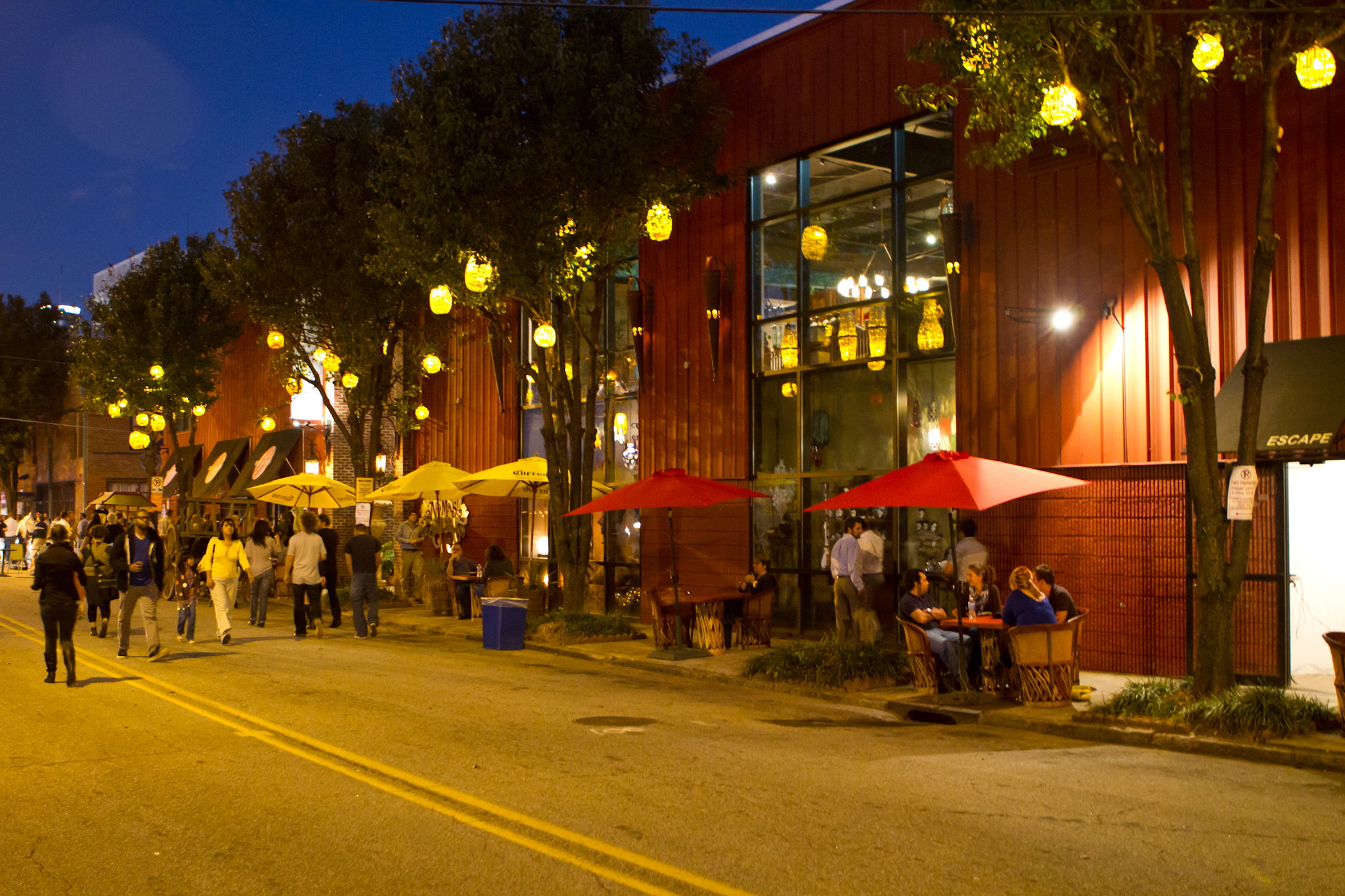
Castleberry Hill, Atlanta -Image Copyright by Burnaway
At first, these are small steps. But over time, a vendor becomes a business owner, an artist builds a brand, and a community begins to participate in its own economy. And most importantly, they stay. Of course, this does not happen on its own.
One idea that emerged from my reflection is the importance of support at the early stage. What if cities or states offered temporary tax relief, reduced rent for local vendors and artists, or created incubation spaces within developments?
At the same time, this vision cannot rely on public support alone. Investors and developers play a critical role. For a project to truly succeed over time, there must be a willingness to invest not only in buildings but in the life of the community itself.
This means considering design, function, and long-term utility as part of a broader commitment—to create places where existing communities can participate, grow, and remain. Perhaps the most meaningful developments are those that recognize value beyond immediate return—where cultivating a resilient local economy and supporting community continuity are seen not as constraints, but as essential components of a project’s lasting success.
This is where I begin to see a deeper role for landscape architecture. I am aware that many organizations already provide meaningful support through grant programs, creative incubators, and small-business initiatives that help artists and emerging entrepreneurs take their first steps.
These efforts are not only generous—they are necessary. They represent a belief that creativity and local culture are worth investing in, even before they become economically proven. I see this as a very positive direction.
Perhaps the next evolution is not just isolated support programs, but a more integrated system—where such opportunities are embedded directly into the fabric of development. Where a plaza, a garden, or a public space is not only designed for beauty and use, but also for opportunity. A place where a small vendor can test an idea, where an artist can exhibit work, where culture can quietly begin to grow roots.
In this sense, development is no longer just construction—it becomes cultivation. And landscape architecture, in its most meaningful form, becomes the ground where that beginning is made possible.
Not forever—but just long enough. Long enough for people to begin. Because the hardest part is not growth—it is entry. This is where I begin to see a deeper role for landscape architecture.
We are not only shaping space—we are shaping possibility. A plaza is not just a plaza. It can be a market. A street is not just circulation. It can be a festival ground. A small corner is not leftover space. It can be someone’s first business.
Design, in this sense, becomes a framework for life to happen. If I try to organize this idea simply, it comes down to identity, access, and ownership—creating a place people connect to, giving them a way to participate, and allowing them to grow, stay, and benefit. Without that last step, something always feels incomplete.
I don’t think design alone can solve these challenges. But I do believe design can start the right conversation. That morning coffee meeting reminded me that development is not only about buildings, spaces, or aesthetics—it is about people, time, and opportunity.
Maybe the real question we should ask is not whether a project is successful, but who is still there when it becomes successful. And perhaps, if we begin there, we can design places that are not only beautiful—but also lasting in a deeper way.
Sustainability is not only environmental—it is economic and cultural continuity.
How can landscape architecture play a role?
Landscape architecture can play a role beyond shaping space—it can support a community's economic life. By grounding design in local history and culture, a place can develop a recognizable identity. But identity alone is not enough.
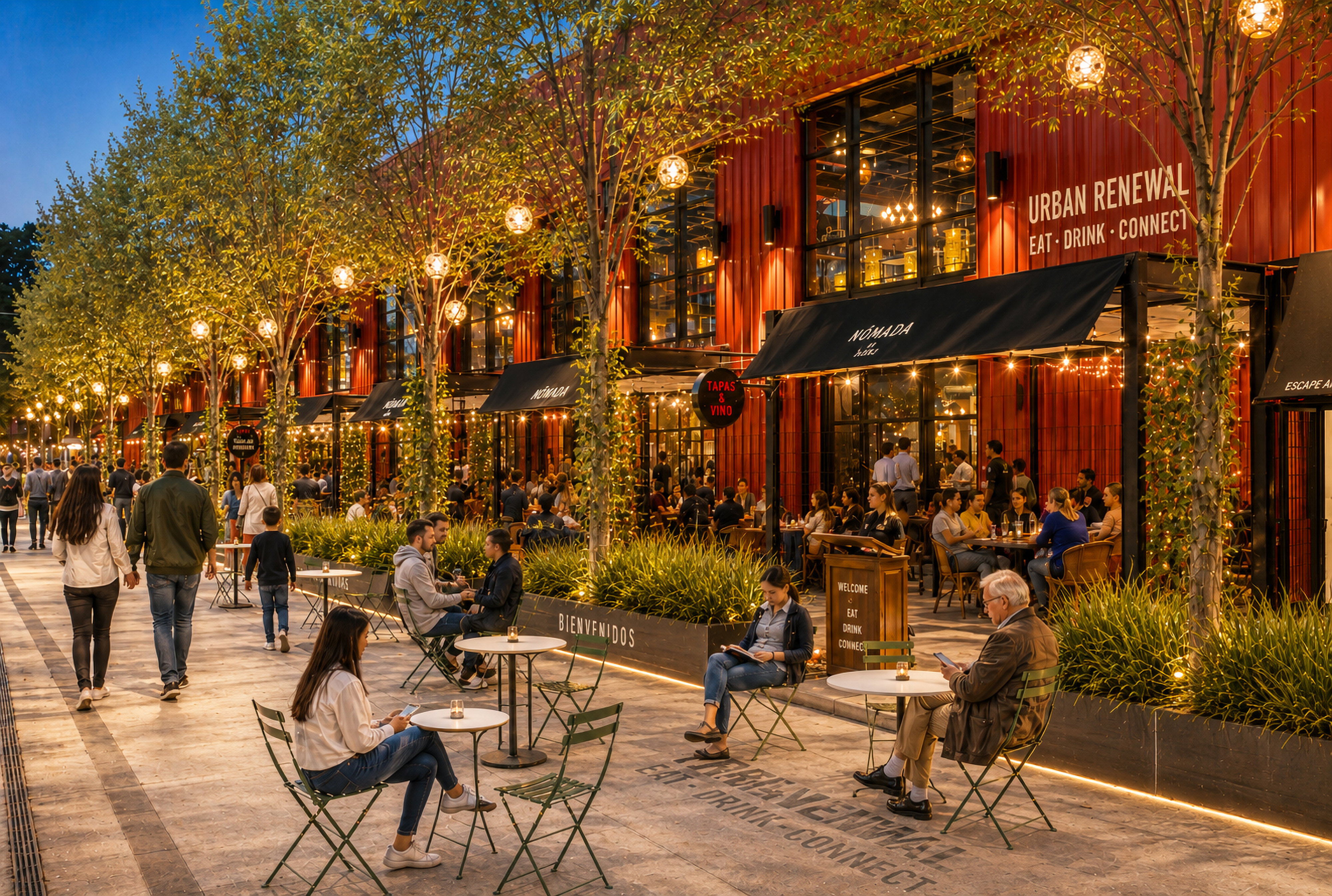
Walter Ryu_Castleberry Hill, Atlanta Reimagined
Spaces must be designed to host programs—markets, events, and small businesses—that allow people to participate economically. In this sense, landscape architecture can contribute to what may be called an ‘economic landscape,’ where spatial design and community activity are interwoven to support long-term sustainability.