Atlanta BeltLine: A Cultural Platform Powered by Landscape Architecture
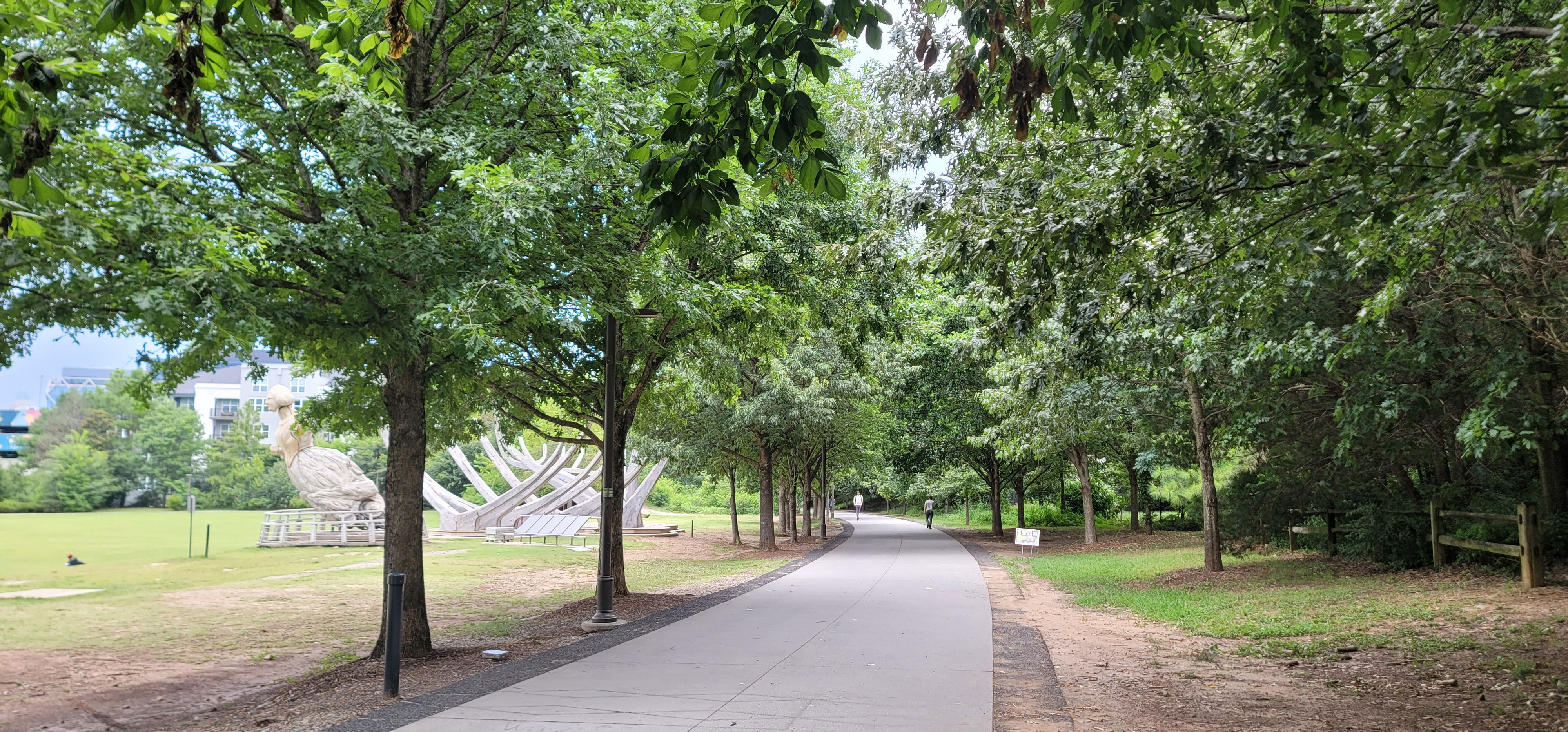
Reflections on form, community, and the lasting, circular impact of the Atlanta BeltLine-an infrastructure project that functions as both a physical loop and a civic connector.
Considering how thoughtful design decisions shape movement, public space, and everyday experience, the BeltLine offers a clear example of how form can influence culture: trails, transit planning, parks, and art installations working together to create places where people gather, commute, exercise, and engage with their city. These reflections are grounded in insights and lessons learned from Kevin Burke, FASLA, Design Director of ATL BTL.
His perspective highlights how design leadership on a project of this scale requires balancing aesthetics with practicality, coordinating across agencies and neighborhoods, and keeping equity, accessibility, and long-term stewardship in view. Through that lens, the BeltLine becomes more than a corridor-it becomes a platform for community identity, local economic activity, and ongoing collaboration among residents, designers, planners, and city partners.
The Atlanta BeltLine is one of the most distinctive examples of how landscape architecture can reshape a city’s future. Unlike many urban park systems that follow simple linear or rectangular geometries, the BeltLine forms a powerful loop around Atlanta's central area. This circular system is not merely infrastructure or recreation space—it is a catalyst for social, cultural, and economic transformation. For comparison, the Joe Louis Greenway in Detroit is a large and important park system, yet its geometry reads more like a conventional rectangular framework around the city. The Atlanta BeltLine, however, introduces something different: a wheel-like structure that wraps around neighborhoods, connecting communities and creating a new spatial identity for the city.
A Platform for Community Life
The BeltLine is often discussed in terms of its trails, art installations, and redevelopment potential. But its deeper impact lies in how it reorganizes urban life. The project has become a platform for:
- public art and cultural programming
- neighborhood connectivity
- health and recreation
- economic revitalization
- community gathering spaces
Over the past twenty years, the Atlanta BeltLine has progressed from a bold, conceptual vision into one of the most influential urban landscape and mobility initiatives in the United States. What began as an effort to repurpose historic rail corridors has grown into a comprehensive framework for reconnecting neighborhoods, expanding access to parks and trails, and encouraging sustainable growth around a continuous loop of multi-use paths, transit planning, and public open space. Along the way, the project has helped catalyze new investment, strengthen public life through plazas and community gathering spaces, and demonstrate how landscape infrastructure can serve as both an ecological asset and an economic driver. Its evolution reflects not only design ambition, but also the complexity of implementing long-range infrastructure in a dynamic metropolitan environment.
During an AIA Atlanta webinar, BeltLine Design Director Kevin Burke discussed the project’s notable milestones and the practical realities behind translating a long-term plan into built work. He highlighted how design decisions-such as creating safe, accessible trail connections, integrating stormwater strategies, and coordinating with streets, utilities, and adjacent developments- require ongoing collaboration across public agencies, consultants, and community stakeholders. Burke noted that the BeltLine’s momentum has been supported by sustained civic engagement, including public participation in planning, advocacy from neighborhood groups, and consistent leadership that has kept the project aligned with its broader goals. He emphasized that this continuity and long-term commitment have been decisive factors in maintaining progress through economic cycles, political transitions, and shifting priorities. Large-scale landscape infrastructure requires patience because it is implemented in phases, shaped by funding availability, right-of-way constraints, and the time-intensive work of design, permitting, and construction. The BeltLine illustrates how persistence, a clear guiding vision, and durable public backing can gradually convert an idea into a lasting civic resource-one that delivers tangible benefits such as expanded recreational opportunities, improved connectivity between communities, and a stronger, more resilient urban environment. As a long-horizon undertaking, it also offers a valuable example for cities nationwide: transformative projects are rarely immediate, but with consistent support and thoughtful execution, they can become generational achievements that redefine how people move through and experience the city.
The Fascination with the Circle
As a designer, what captivated me most was not only the BeltLine’s programmatic purpose-its role in mobility, recreation, and economic development-but also its physical form and spatial logic.
The BeltLine’s circular geometry, wall clock, wheel, feels almost archetypal, like a contemporary reinterpretation of the ring roads, fortifications, and edge conditions that have historically shaped cities.
It surrounds many of Atlanta’s most active and rapidly transforming areas like a wheel, creating a continuous loop that both connects districts and frames them. In doing so, it operates as more than infrastructure: it becomes an organizing diagram for growth, a shared civic corridor, and a legible boundary that helps define a collective urban identity across neighborhoods that might otherwise feel fragmented or disconnected.
This observation reminded me of other circular or enclosed urban forms I have encountered around the world, in which a strong perimeter or ring structure shapes how people navigate, gather, and understand the city as a whole. In Chiang Mai, for example, the Old City Walls define a complete enclosure that once protected the city centuries ago and still shapes its character today, marking a clear inside and outside, concentrating cultural landmarks and street life within the boundary, and giving residents and visitors an intuitive sense of orientation through a continuous, historically rooted urban edge.
Similarly, the Seoul City Wall once surrounded the capital of the Joseon Dynasty more than 500 years ago.
Throughout Europe, castles and fortified towns also used enclosure as a defining spatial structure. These historical examples were defensive in nature, yet they also created a strong psychological boundary that shaped identity and belonging.
Walter’s Theory: The Psychology of the Belt
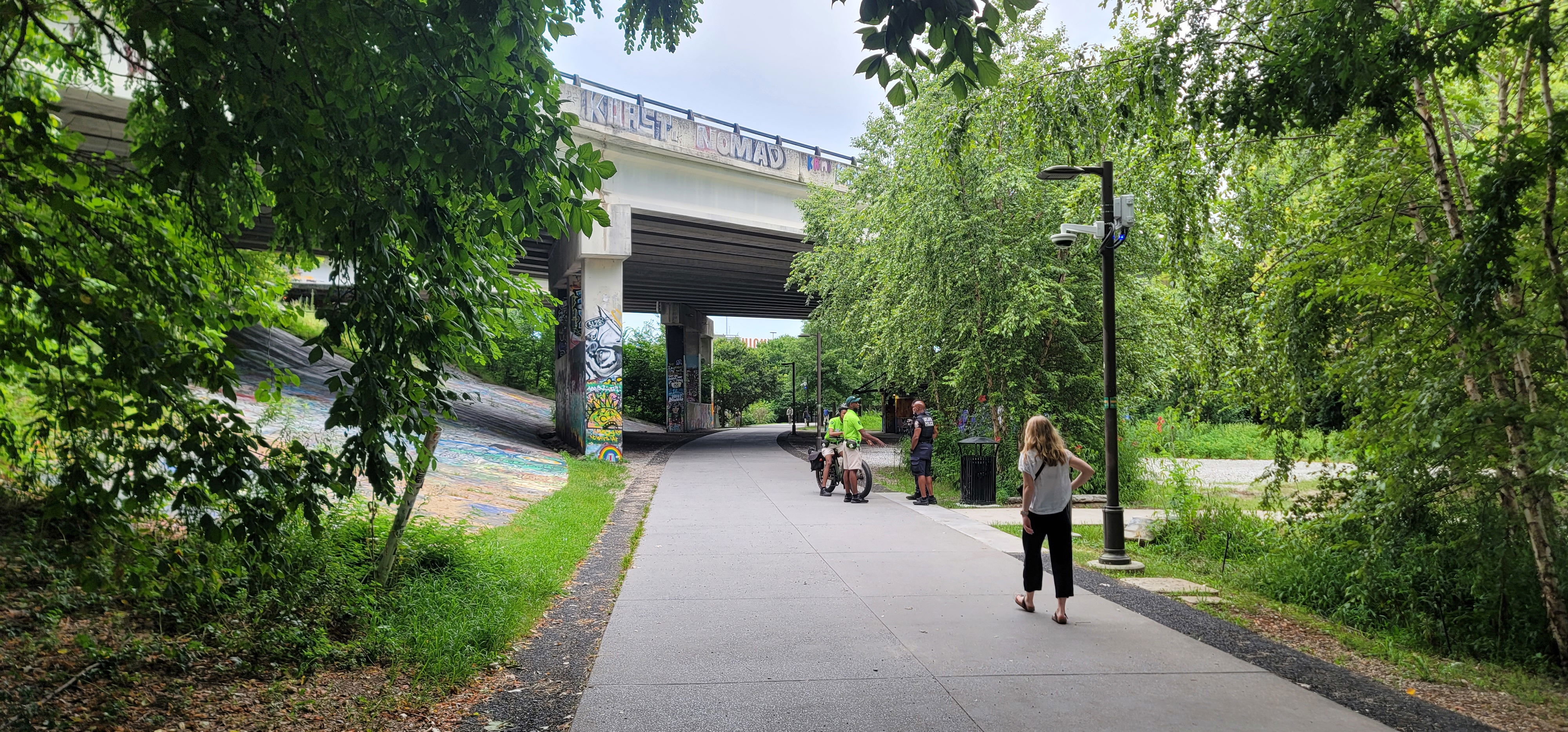
This leads to a personal hypothesis—what I sometimes call Walter’s theory of enclosure. Perhaps the original concept of the BeltLine unconsciously echoes the ancient DNA of protective urban forms.
Instead of defensive walls, Atlanta now has a civic belt—a ring that protects not with stone but with parks, trails, culture, and community life. Where historic walls once separated cities from the outside world, the BeltLine connects neighborhoods and invites people in.
Form as Design Power
Landscape architecture is often evaluated primarily through function-how well a space supports circulation and accessibility, restores or protects ecological systems, provides recreational opportunities, and manages stormwater through green infrastructure.
These performance metrics are essential, especially as cities face climate pressures and growing demands on public space. Yet projects like the BeltLine remind us that form itself carries cultural power: the shape, legibility, and spatial logic of a landscape can influence how people understand, navigate, and attach meaning to a place over time.
A Living Urban Framework
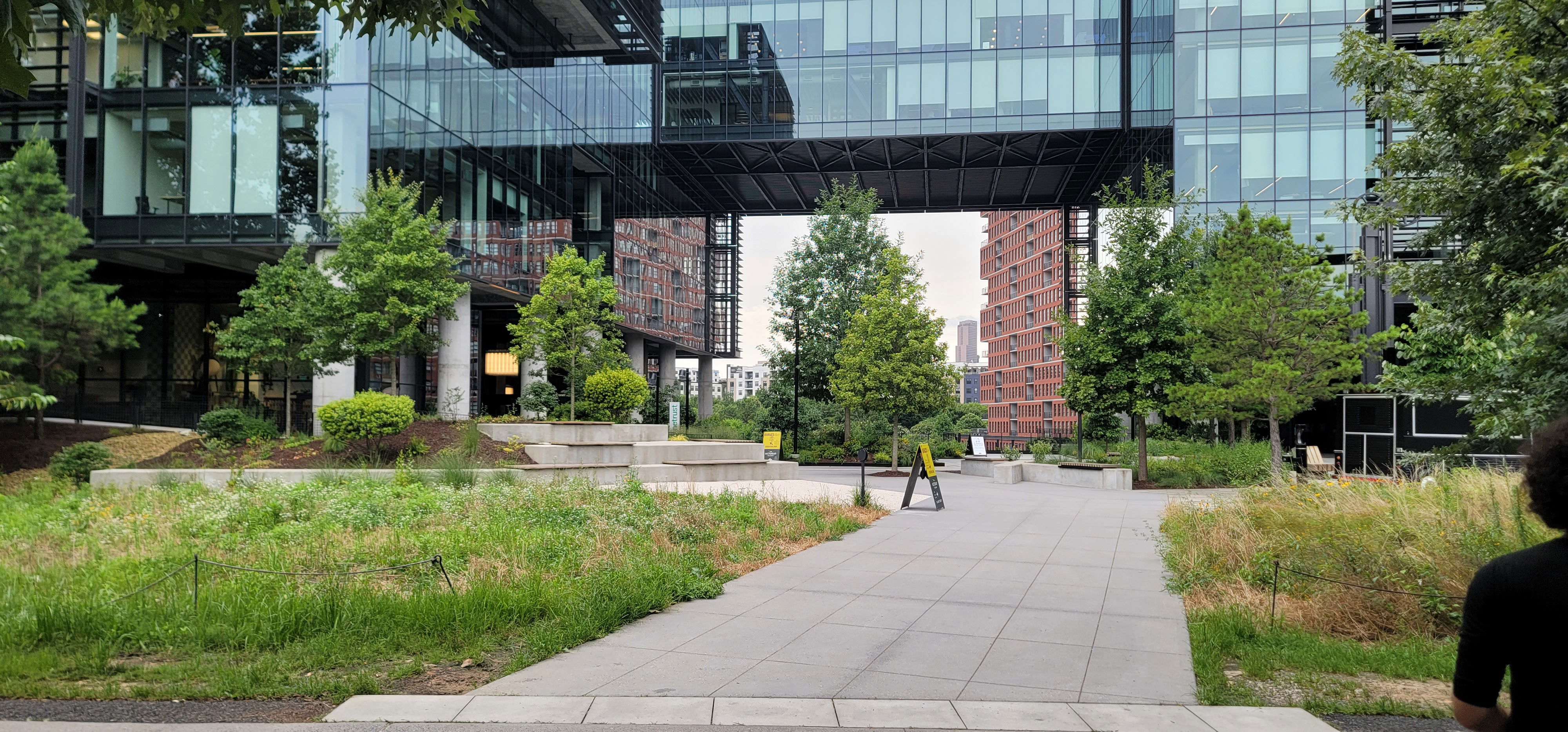
Today, the BeltLine continues to evolve. It is not a finished park but an ongoing urban framework—one that will continue to shape Atlanta for generations. For landscape architects, it stands as a powerful reminder: Design is not only about creating spaces.
Sometimes it is about creating systems—systems that redefine how a city lives, moves, and connects. And occasionally, the simplest geometry—a circle—can change everything.