ART GATEWAY WITH A POLLINATOR GARDEN
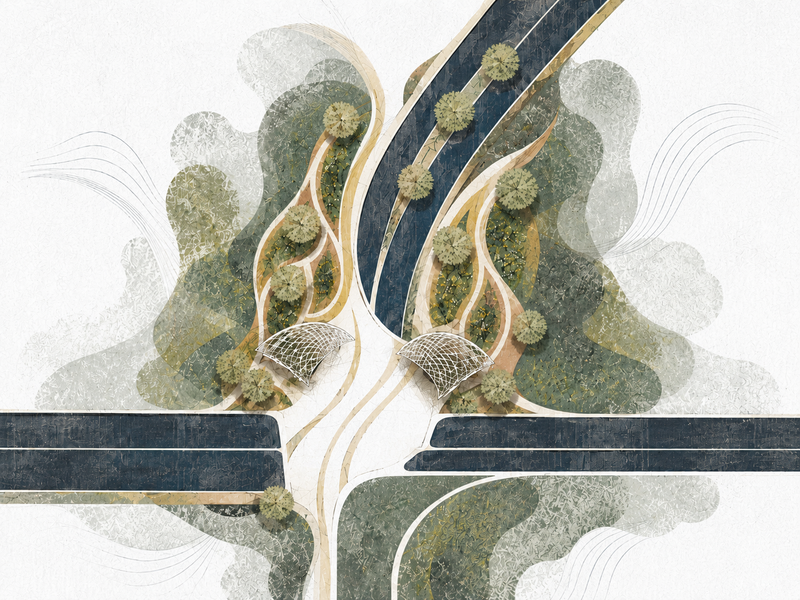
The Art Gateway with A Pollinator Garden reimagines an existing roadway intersection as a memorable civic gateway, transforming a typical vehicular corridor into a place of identity, ecology, and community pride.
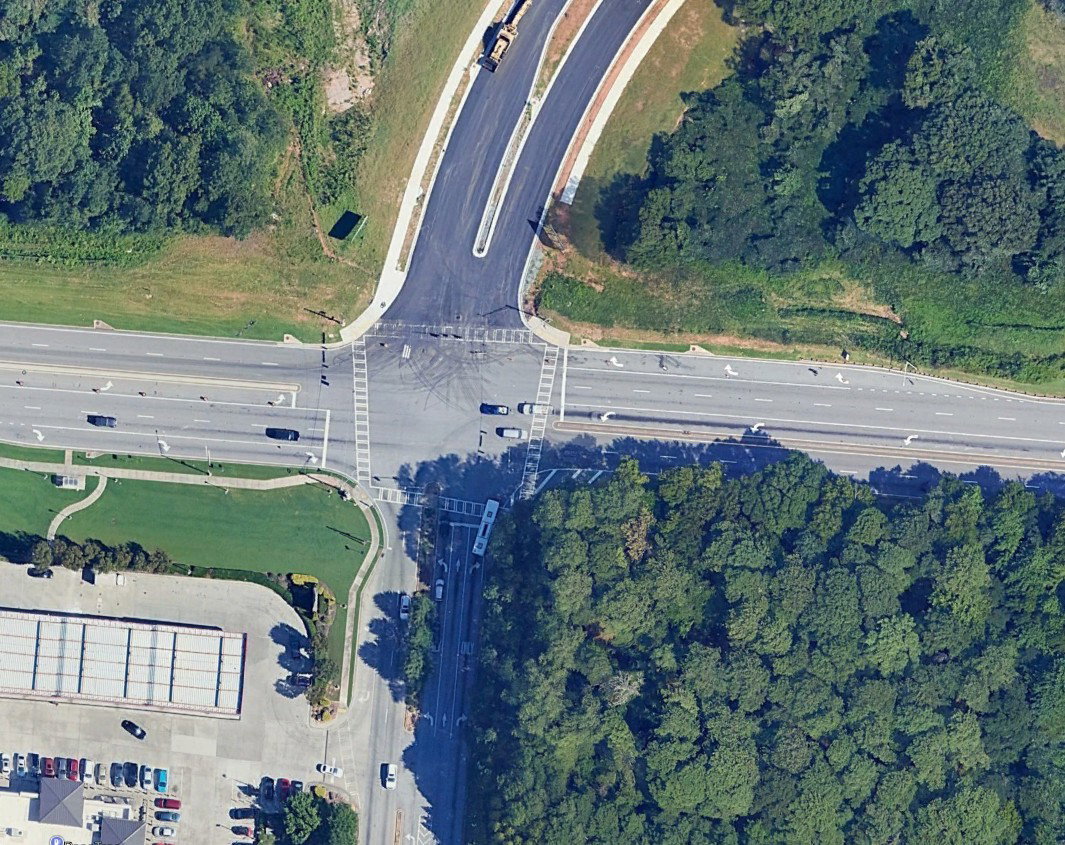 The current intersection functions mainly as a corridor with limited landscape identity and minimal ecological value. vehicular. Existing conditions aerial image. Source: Google Earth; imagery © 2026 Airbus
Instead of treating the roadside as leftover land, this proposal introduces a layered landscape experience with sculptural gateway structures, native pollinator planting, shaded pedestrian paths, and artistic paving patterns. The design creates a stronger sense of arrival while enhancing the corridor's ecological value.
Design Vision
The concept is inspired by the movement of nature, pollinators, and flowing landscape patterns. Curved walkways and planting beds create a softer transition between the road, sidewalk, and surrounding green space. The proposed art gateway structures act as visual landmarks, welcoming residents and visitors while giving the intersection a distinct identity.
The design is not only decorative. It is intended to become a living landscape that supports pollinators, encourages walking, and provides opportunities for education, stewardship, and community participation.
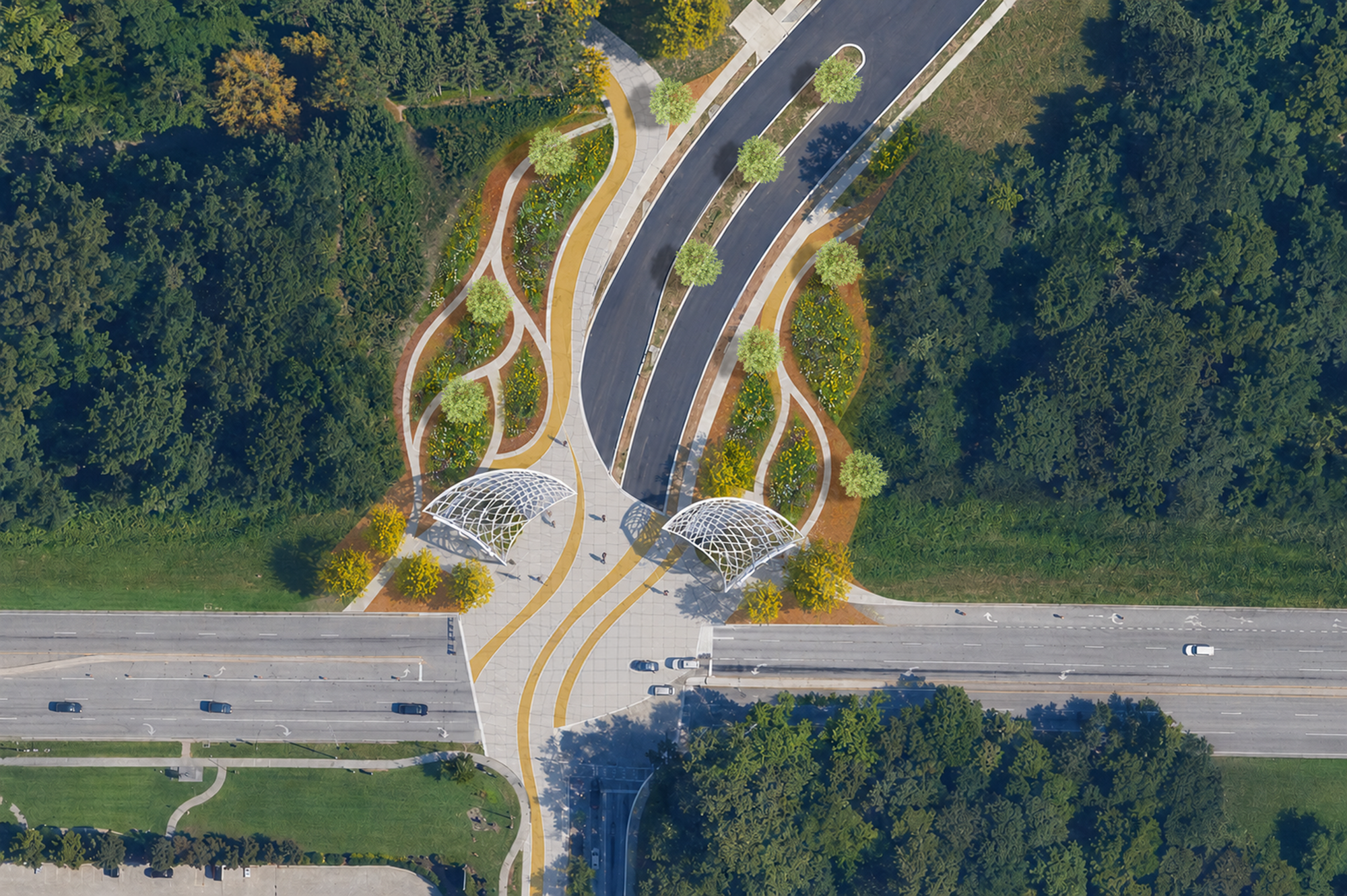 The design transforms the intersection into a civic gateway with sculptural structures, native planting, pedestrian pathways, and pollinator habitat.
Pollinator Garden Strategy
The proposed pollinator garden replaces conventional roadside landscape treatment with a more sustainable and meaningful planting approach. Native and adaptive flowering plants can support bees, butterflies, and other beneficial insects throughout the seasons.
The planting areas may include a mix of native grasses, wildflowers, flowering shrubs, and small canopy trees. These plant communities can reduce mowing needs, improve biodiversity, and create a more resilient roadside environment.
Community and Educational Value
This gateway can become more than an entry feature. It can serve as an outdoor learning landscape where community members, students, and volunteers can participate in habitat monitoring, seasonal planting, and pollinator observation.
Potential community programs may include:
- Pollinator habitat monitoring
- Volunteer planting days
- Educational signage about native plants and pollinators
- Community stewardship events
- Seasonal landscape maintenance partnerships
Design Elements
The proposal includes several key design components:
Sculptural Art Gateway
Lightweight architectural gateway structures create a landmark moment and establish a recognizable identity for the corridor.
Pollinator Planting Beds
Curved garden areas introduce seasonal color, habitat value, and ecological performance.
Pedestrian Pathways
Enhanced walkways improve the pedestrian experience and connect the gateway to surrounding sidewalks.
Artistic Paving Pattern
Flowing paving bands create a sense of movement and visually connect both sides of the intersection.
Shade Trees and Landscape Buffering
New trees provide shade, comfort, and a stronger green edge along the roadway.