A POLLINATOR GARDEN
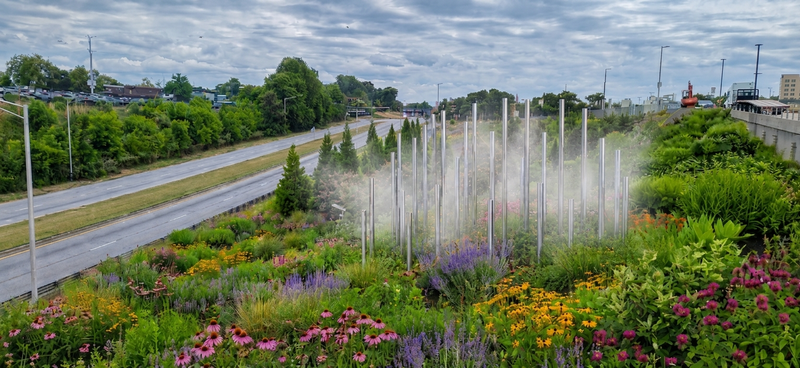
Walter Ryu Studio proposes transforming a typical roadside landscape area in Georgia into a vibrant pollinator garden and ecological corridor. Instead of applying a conventional roadside treatment focused only on turf, erosion control, or low-maintenance groundcover, this proposal introduces a layered planting strategy that supports pollinators, improves visual quality, and creates long-term community value.
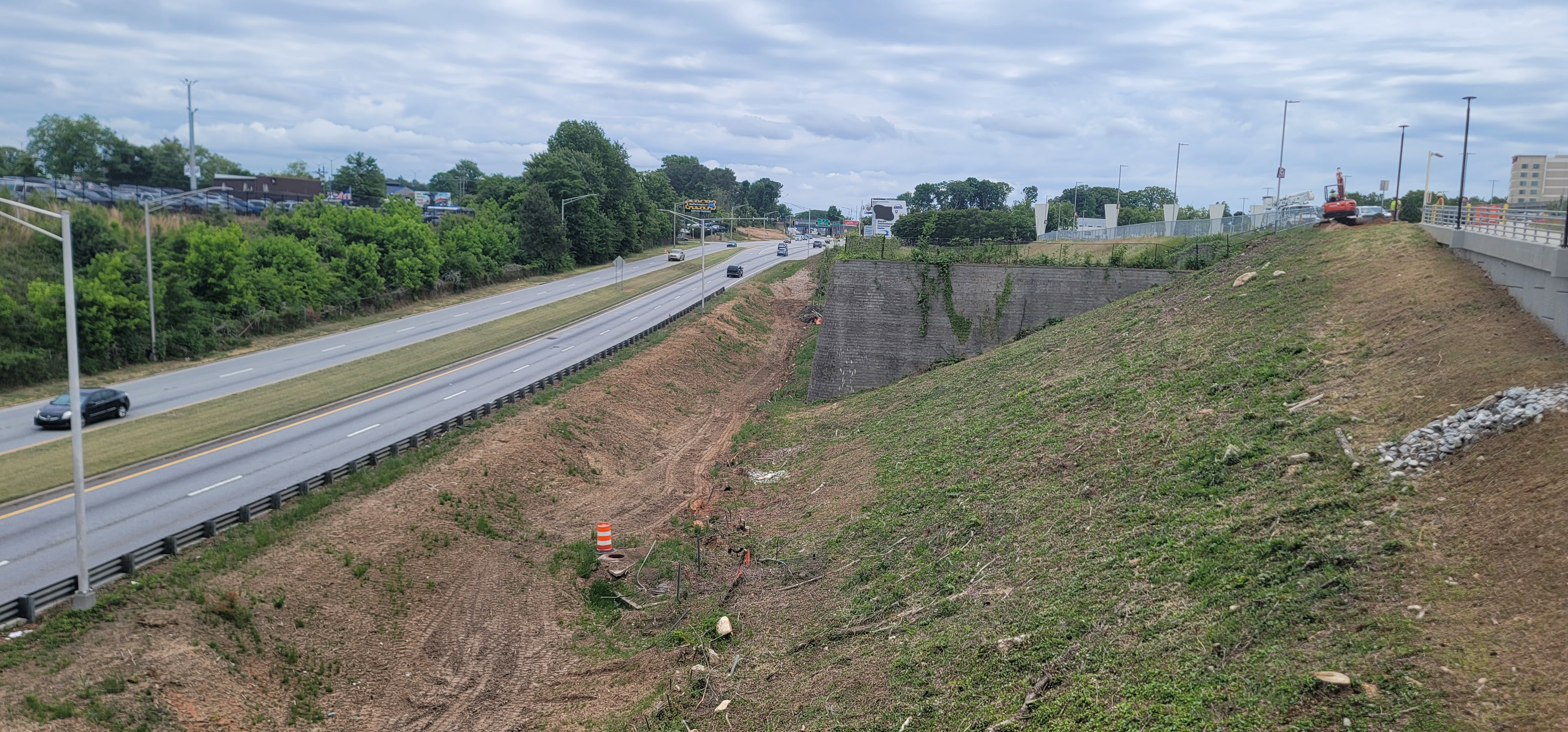 A typical roadside slope next to a Georgia highway corridor with limited planting and exposed maintenance conditions. Photo by Walter Ryu
The project site, located next to a highway corridor, presents an opportunity to rethink overlooked infrastructure landscapes. Sloped roadside areas are often treated as leftover spaces, but they can become productive ecological landscapes that support bees, butterflies, birds, and other beneficial wildlife.
This concept uses native and adaptive flowering perennials, ornamental grasses, evergreen screening, and seasonal color planting to create a resilient roadside garden. The planting design can help reduce mowing needs, stabilize slopes, improve biodiversity, and provide a stronger visual identity for the corridor.
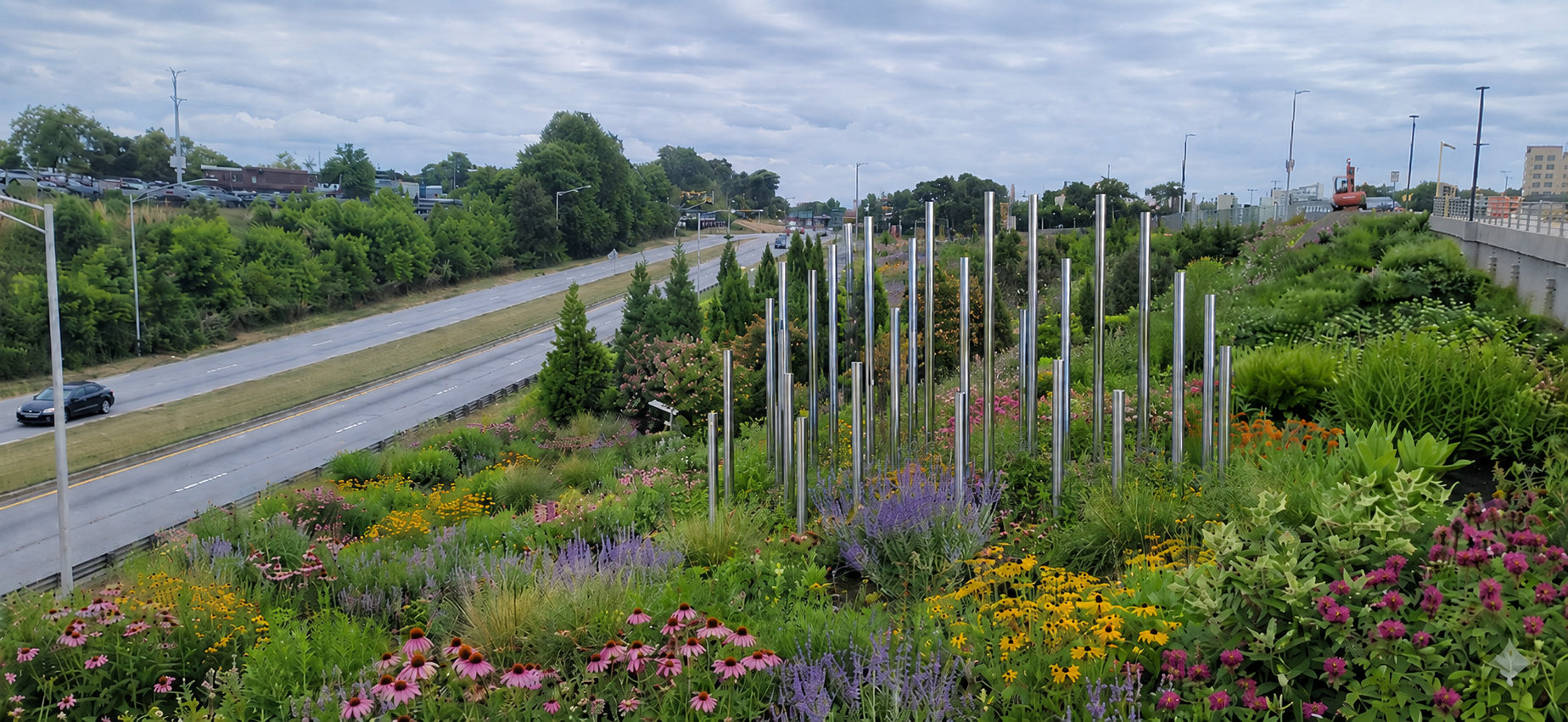 A transformed pollinator garden with layered native-style planting, seasonal color, evergreen structure, habitat value,and a modern sculpture.
Beyond beautification, the proposal also introduces a community-based habitat monitoring program. Local volunteers, students, garden clubs, and environmental groups could participate in seasonal observation, pollinator counts, plant performance tracking, and maintenance support. This creates an educational opportunity while building local stewardship around public landscapes.
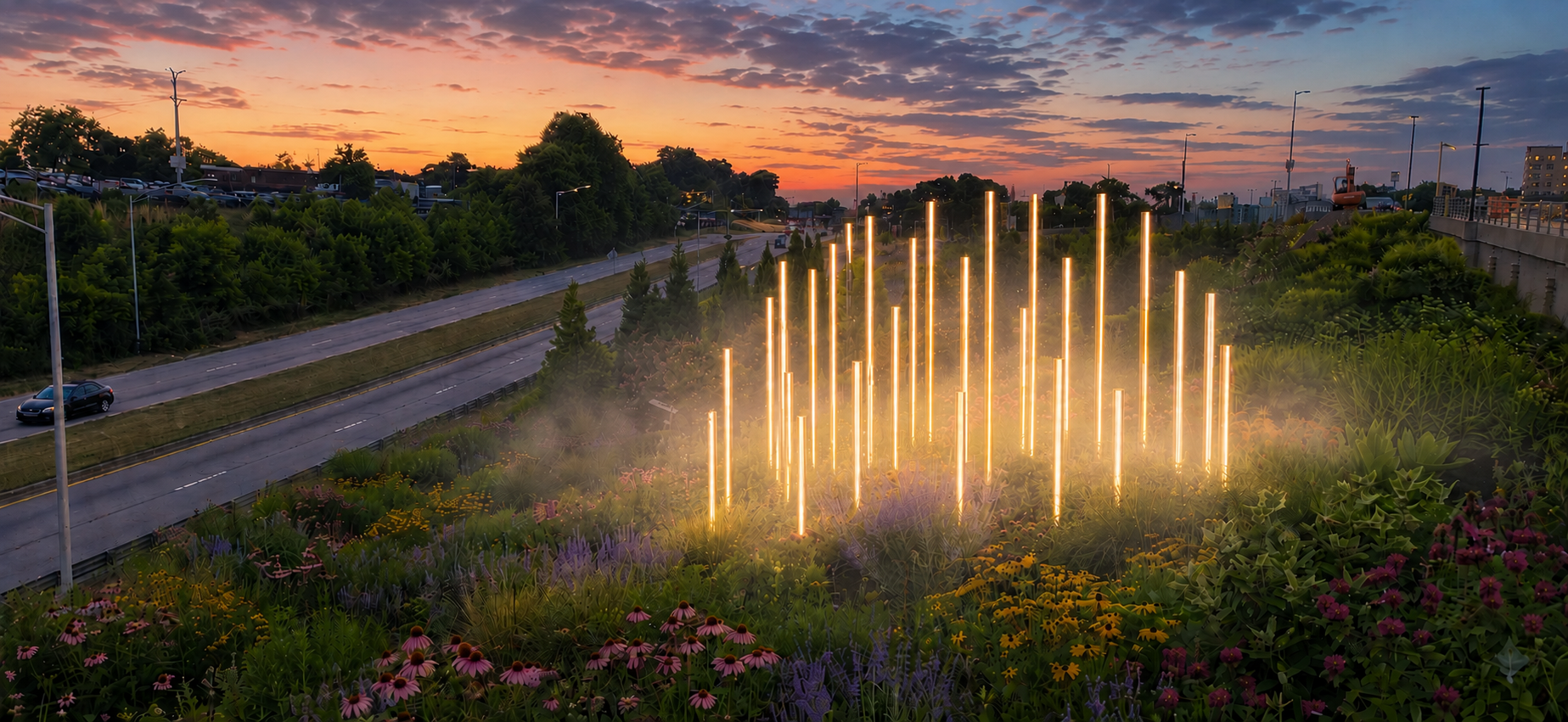
The vision is to convert a standard roadside condition into a living garden infrastructure — one that is beautiful, ecological, and connected to the community.