Sharing Ideas Across Cultures and Generations at Chiang Mai University, Thailand
Last autumn in Chiang Mai, my journey through nature, design, and culture took an unexpected and meaningful turn.
Although I am not someone defined by extraordinary business success, I still carry the memory of the kindness I received nearly twenty-five years ago, when James van Sweden once helped guide me. That memory stayed with me, and in many ways, led me to give back.
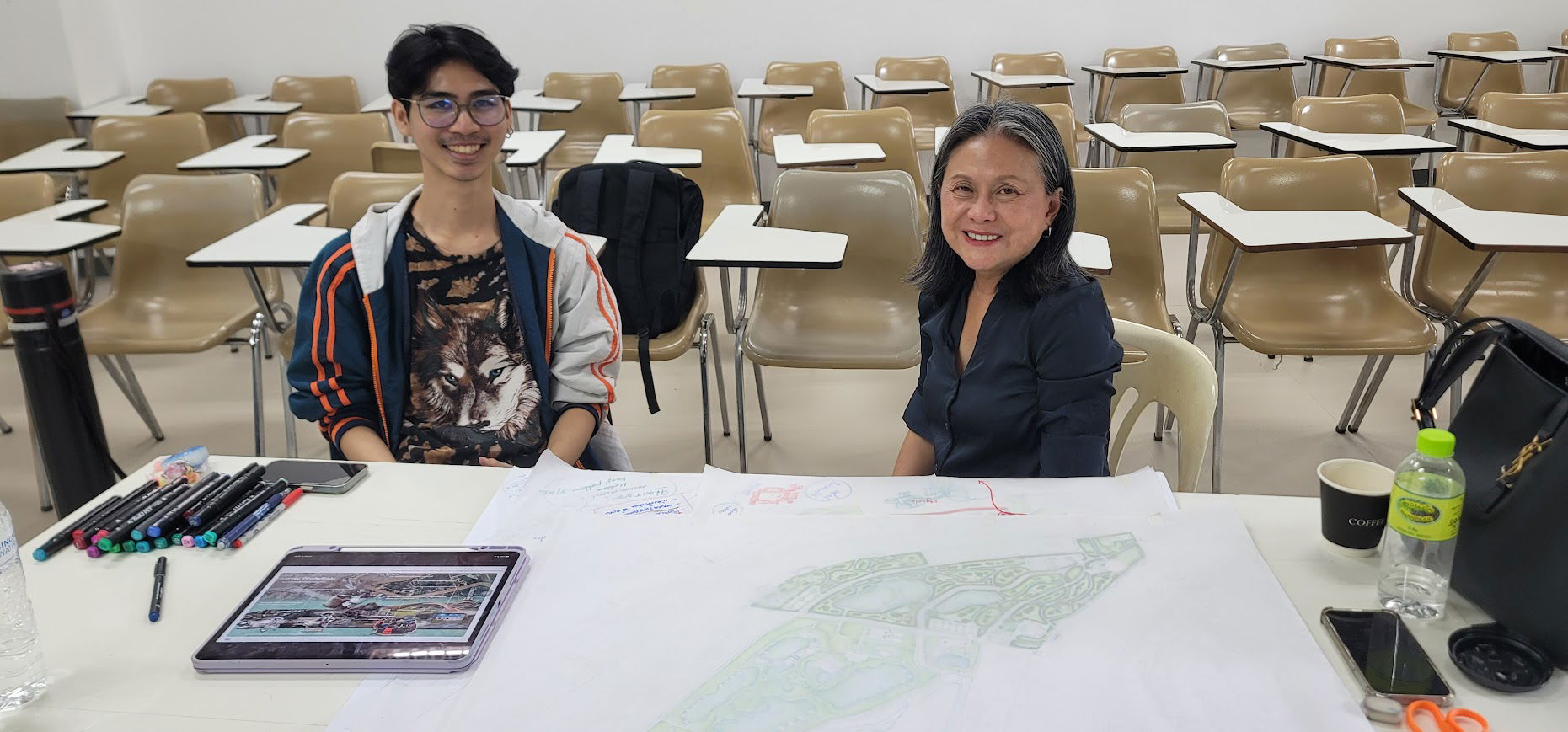
Unlike my visits to studios and craftsmen, or quiet moments spent observing the landscape, this time I stepped into a classroom—specifically, the 3rd-year Urban Design and Landscape Architecture Planning Studio led by Associate Professor Kasama Polakit, PhD, at the Faculty of Architecture.
Although I had given special lectures at Seoul National University and the University of Seoul’s undergraduate programs many years ago, this experience felt remarkably refreshing. With greater maturity and a deeper reservoir of project experience, I approached the students with renewed purpose and clarity. It reminded me that teaching is not only about sharing knowledge, but also about revisiting one’s own journey through the eyes of the next generation. What began as a short visit quickly grew into something far more meaningful.
A Classroom Full of Light
The students were immersed in ambitious urban-design questions—how people live, move, and breathe within a city. Their energy reminded me of my own early years, when the world of design felt enormous, and everything seemed possible. I am deeply grateful to Professor Kasama, who invited me into her studio and trusted me with her students.
She has an impressive academic journey—having previously taught courses at the University of Florida and other institutes in the United States before joining Chiang Mai University. Her global experience resonates strongly with me, and I truly appreciate the opportunity she gave me to share my thoughts with her class. Under her guidance, the studio is not just a place of assignments—it is a place of exploration, cultural reflection, and thoughtful questioning.
Teaching as Giving Back
This session reaffirmed my belief that design knowledge should circulate freely—not confined to offices or commercial boundaries. Contributing my time without fee, without contract, without expectation, felt like the most natural thing to do.
It reminded me why I entered this profession in the first place:
- to touch lives through design,
- to share what I have learned,
- and to leave something meaningful behind—however small.
Teaching the students in Chiang Mai became its own form of charity, a way to honor the kindness and inspiration I had received throughout my time in Thailand.
Crossing Cultures, Sharing Perspectives
As a Korean-American designer practicing in the United States but shaped by global experiences—from Singapore to Saipan, from Seoul to Atlanta—my design lens is naturally multicultural. Yet in that classroom, I was not the foreigner.
I was simply one voice among many: sharing, listening, learning. I listened to about design thinking, drawing methods, the importance of understanding local culture, and the long journey of becoming a sensitive landscape architect. The students responded with curiosity, honesty, and a kindness that followed me long after the session ended.
I left the classroom humbled, grateful, and inspired by the next generation of Thai designers who will one day shape their cities with clarity, imagination, and a profound respect for nature. Sometimes, the most meaningful work we do is the work we do for free—given quietly, received openly, and remembered deeply.