Rhumb Lines and the Garden: Power, Flow, and the Search for Another Order
In the history of landscape architecture, lines have always carried intention. In the work of André Le Nôtre, the line is absolute.
It is axial, dominant, and unwavering.
The garden extends from the palace like a declaration—nature aligned to human will, perspective controlled, hierarchy imposed.
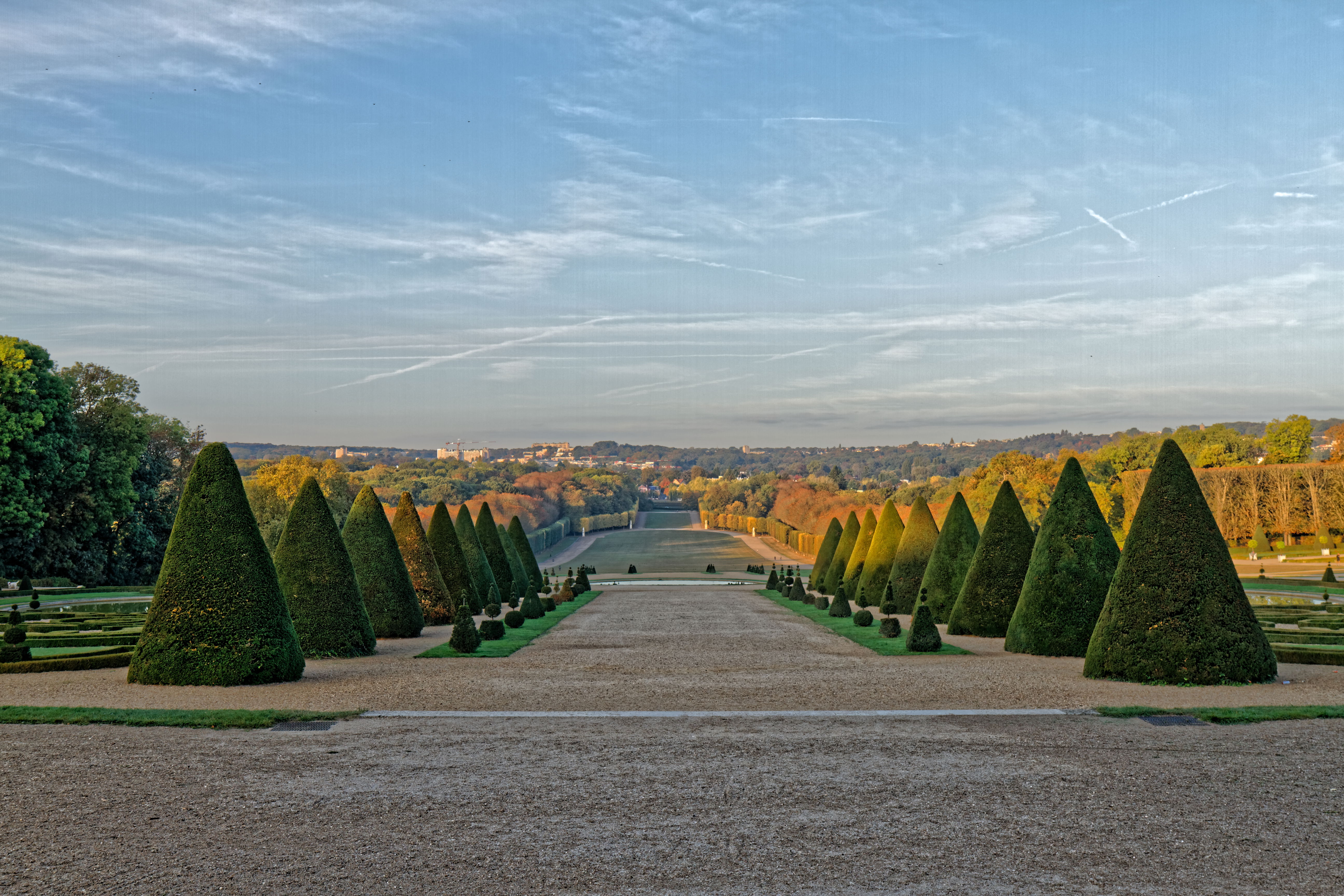
This is the geometry of power. The axis is not merely a visual device—it is a statement that carries an emotional element, whether from the client side, toward guests, or from the user perspective.
But elsewhere, in a different tradition of drawing, another kind of line appears—the rhumb line. On early navigational maps, rhumb lines radiate across the sea, connecting invisible winds, directions, and journeys.
They do not impose order; they reveal movement.
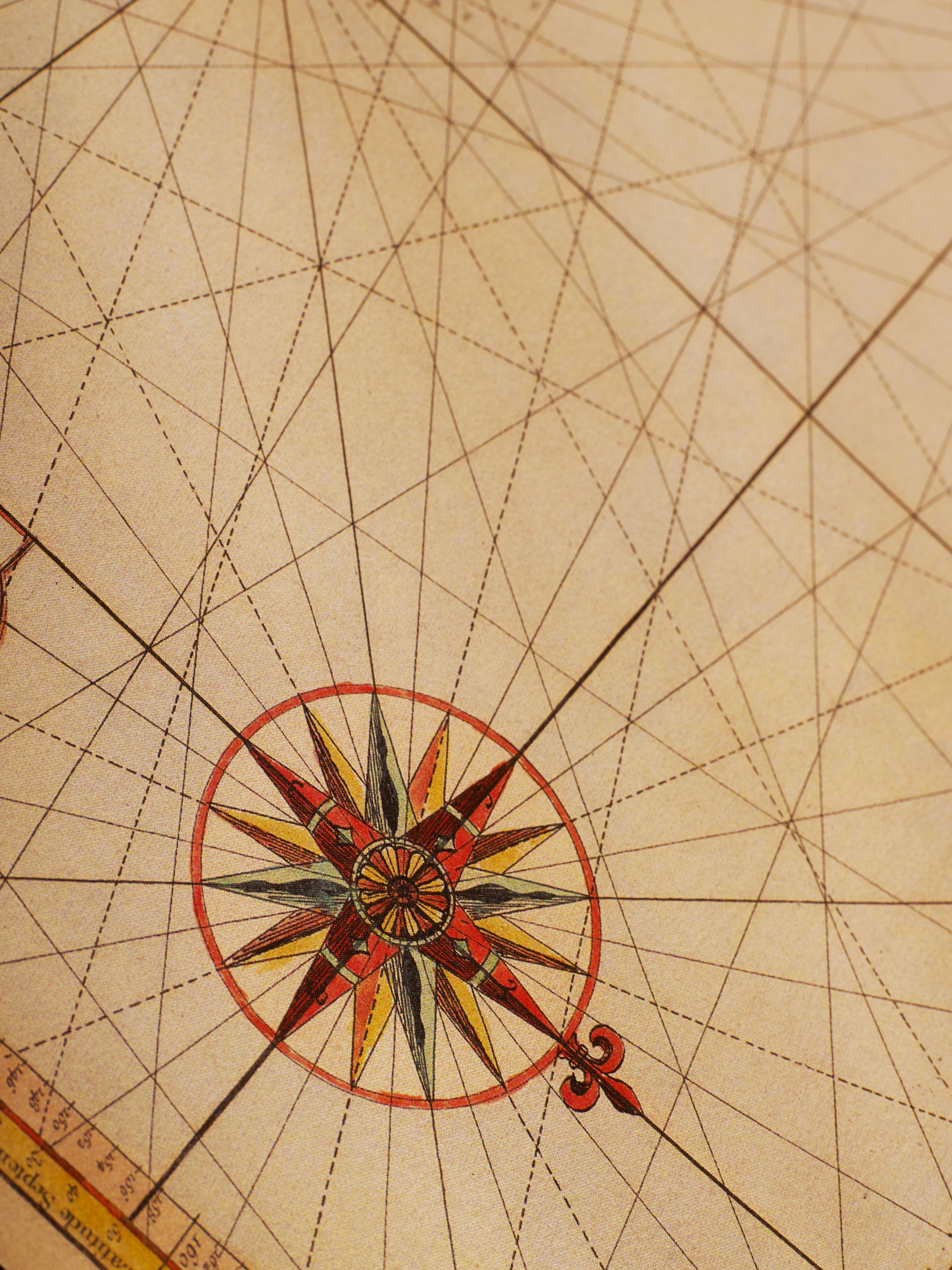
These lines are not boundaries.
They are vectors—not directly but related to carriers of wind, time, and uncertainty. They suggest that space is not static, but lived, felt, and navigated.
This raises a question for contemporary landscape architecture in a design thinking process, and also gives a possibility of another perspective:
What if planning is not only about controlling space through drawn lines, but about tracing flows—networks of directional lines shaped by designers—that carry layered user experiences and individual perspectives?
In my own thinking, the line takes on a different meaning. The interesting aspect of rhumb lines, which existed in mapping culture, adds a new dimension to landscape-related ideas and also serves as a metaphor.
Not a rigid axis, but a directional field. A park, an urban plaza, even a garden, can be composed through lines that:
- follow wind patterns
- suggest movement and pause
- overlap multiple orientations
- allow ambiguity and discovery
At first glance, such compositions, such as adding another layer or perspective or thoughts, may appear unresolved, even uncomfortable. This is where the work of M. C. Escher becomes relevant.
The line becomes invisible but experiential. Not 2D, but almost atmospheric. say atmospheric landscape lines, floating grids, or axes, which are different from the traditional master's lines in the garden.
Escher’s drawings are often described as “impossible,” yet they obey an internal logic.
They challenge the viewer not by rejecting order, but by proposing another order. An order where:
What initially feels “wrong” begins to reveal its own coherence.
- multiple perspectives coexist
- direction is ambiguous
- space folds back onto itself
Perhaps landscape architecture, too, has been too faithful to a single idea of beauty. The classical axis is clear, legible, and powerful—but it is not the only truth. There may be beauty in:
- overlapping systems
- directional tension
- irregular alignments
- even compositions that feel slightly “off.”
Because identity does not always emerge from perfection. It can emerge from conflict, layering, and contradiction.
In this sense, Escher’s explorations echo something deeper—something literary. Like Don Quixote by Miguel de Cervantes, where reality and imagination blur, and the hero moves through a world that does not fully align with conventional logic. Don Quixote is often seen as misguided, even absurd.
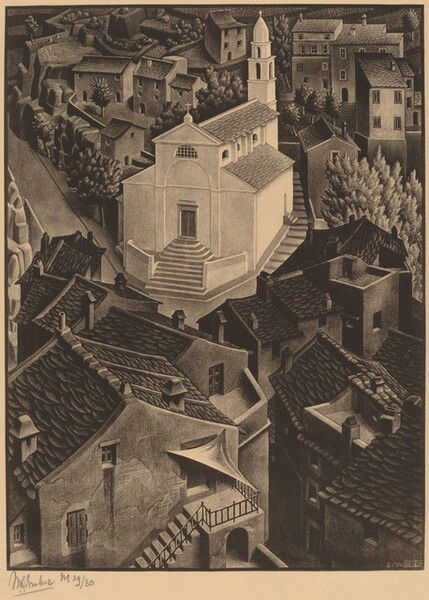
Nonza,_Corsica_by_M._C._Escher
This image, released under CC0 public domain, is used here as a conceptual reference to illustrate alternative spatial logics beyond conventional axial order.
Yet his vision reveals another layer of meaning—a world shaped not only by what is, but by what could be perceived.
So perhaps the future of landscape architecture could lie somewhere between:
- the certainty of Le Nôtre’s axis
- the fluidity of rhumb lines (experience-oriented and healing emotional, which does not directly carry proven data)
- the paradox of Escher
- and the imaginative persistence of Don Quixote
The question is no longer:
How do we control space?
But rather:
How do we navigate it, layer it, and allow it to remain open?
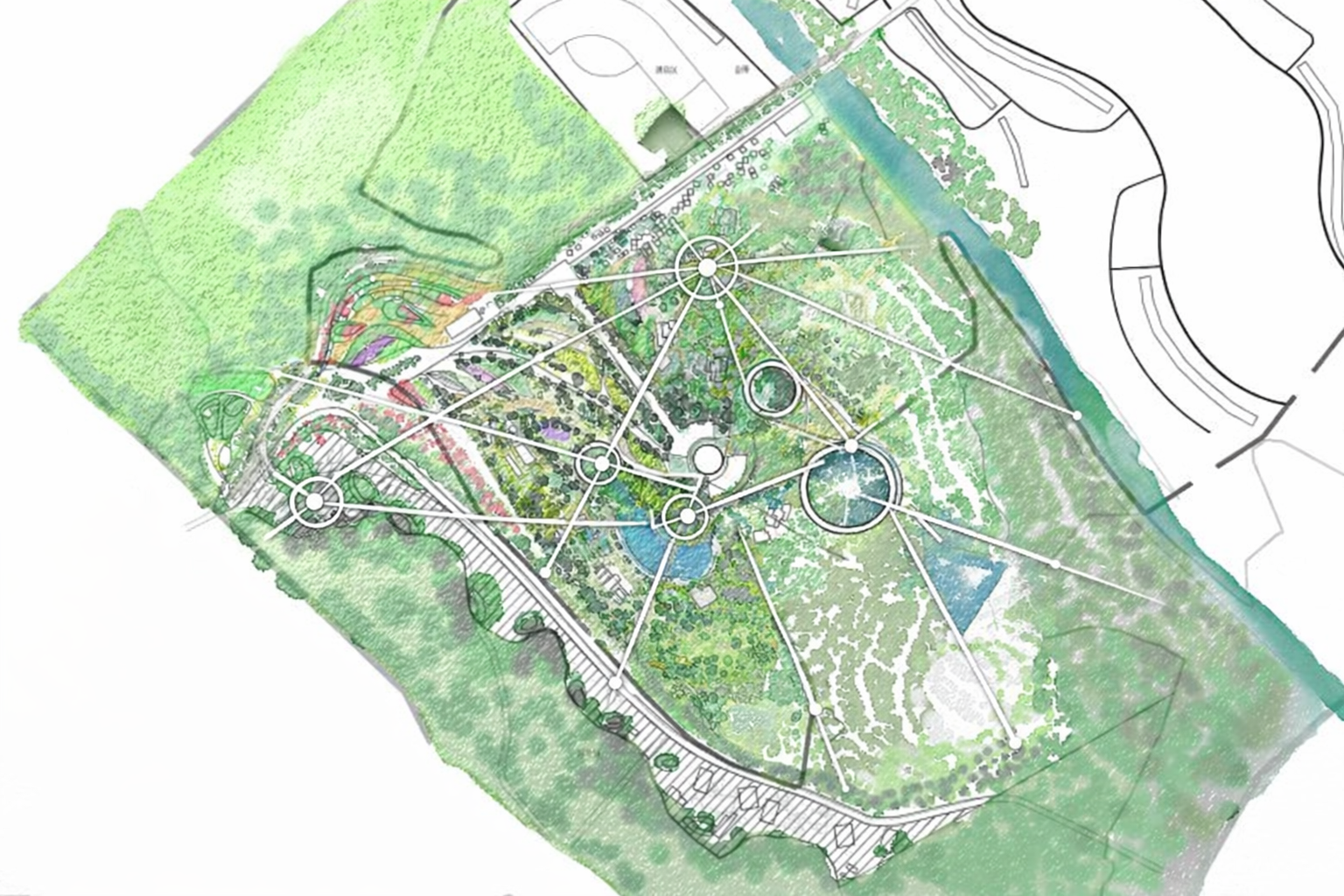
Walter Ryu, Gangdong Bird Kingdom Theme Park Master Plan Concept Sketch, Hainan, China -unbuilt project with a 500-acre lot with layers of nature, social, and experience rhumb lines overlaid in the design process.
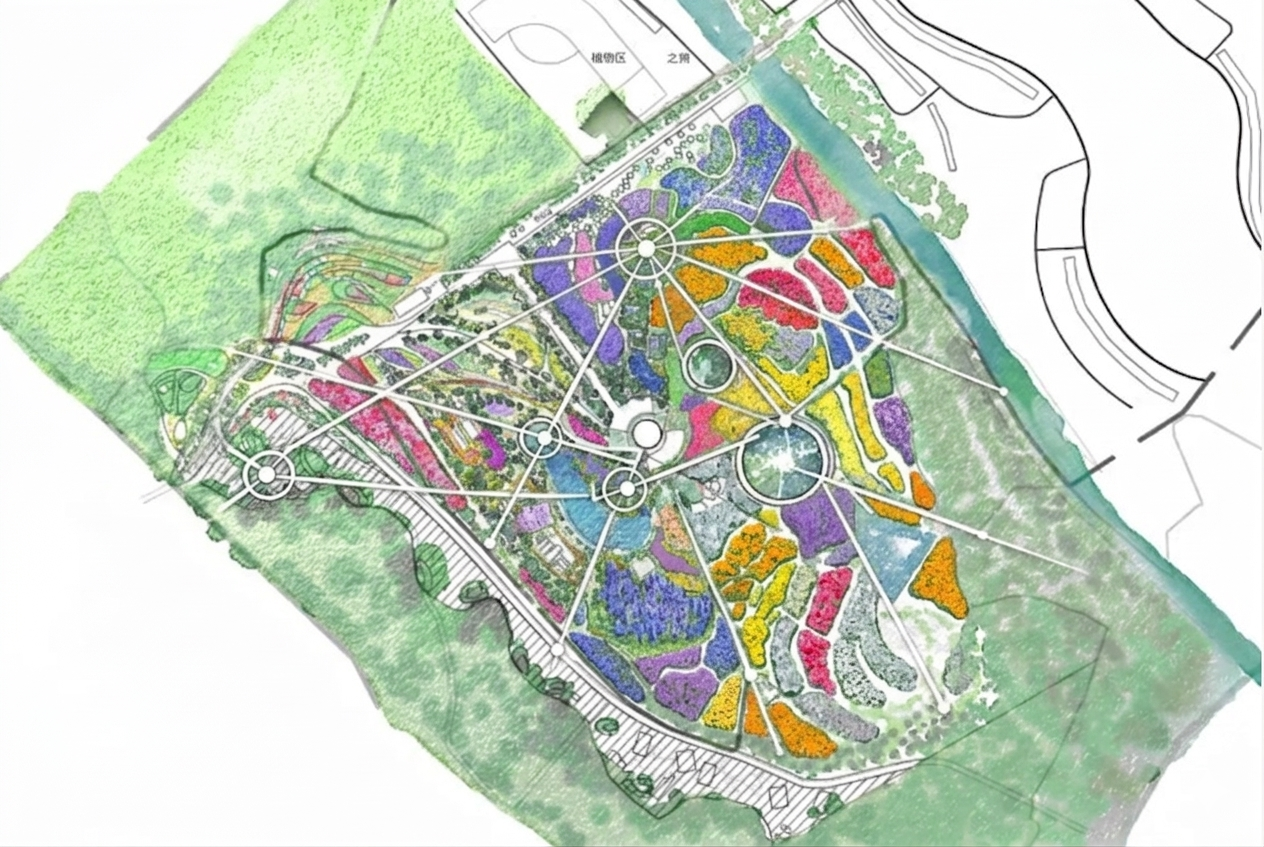
In this shift, the line is no longer a tool of domination. It becomes a medium of exploration. A quiet guide through wind, time, and human experience.